Construction scams remain a serious challenge both in Zambia and globally. These fraudulent practices affect homeowners, businesses, government institutions, churches, schools, and major corporations. In many cases, scams arise due to weak contractual agreements, fake qualifications, inadequate project oversight, corruption, and clients seeking unusually low-cost services. The construction industry is prevalent with unethical practices. Unethical practices exist both in developing and developed countries. Those common on construction projects include: corruption; conflict of interest; fraud; collusion; negligence; and poor quality work. These practices may have devastating effects on a country’s economy. The purpose of this study was to: investigate the practices of ethics in the construction industry; identify significant unethical practices on construction projects in Zambia; and suggest strategies for addressing identified malpractices. A questionnaire was used to collect data. The results reported in this paper suggest the prevalence of unethical practices in all phases of construction projects in Zambia. Benchmarking best practices in ethics; observing ethics guidelines; following good leadership on ethics; pursuing indictments and convictions of individuals established to be guilty by courts of law; and simplifying tender procedures have all been recommended as strategies for combating unethical practices.
Common Construction Scams in Zambia
- Fake Contractors
Some individuals falsely present themselves as qualified contractors, builders, or engineers despite lacking the necessary registration, experience, or professional certification.
How It Happens:
- Presentation of fake certificates and qualifications
- Use of stolen photographs from legitimate projects
- False claims of connections with government officials or influential individuals
- Requests for large upfront deposits before disappearing
Warning Signs:
- No physical office location
- No registration with PACRA Zambia
- No valid engineering or contractor license
- Refusal to provide written contracts
- Communication conducted only through WhatsApp or informal channels
2. Advance Payment Fraud
A contractor may request large upfront payments under the pretext of purchasing construction materials, only to delay the project indefinitely or disappear entirely.
Common Excuse
“Material prices are increasing rapidly, so payment must be made immediately.”
Typical Outcomes:
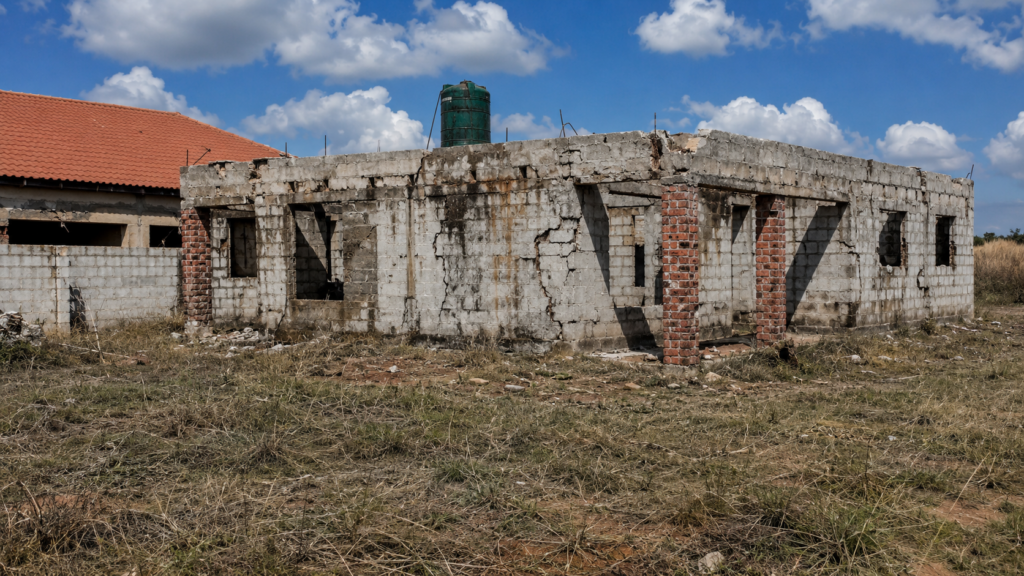
- Incomplete or half-built structures
- Abandoned construction sites
- Financial losses and stolen funds
3. Use of Substandard or Counterfeit Materials
Some contractors intentionally replace high-quality construction materials with inferior or counterfeit alternatives in order to reduce costs and maximize profits.
Common Examples:
- Weak or diluted cement
- Counterfeit electrical cables
- Thin or poor-quality roofing sheets
- Low-grade steel reinforcement materials
Risks Involved:
- Structural failure or collapse
- Fire hazards due to unsafe electrical systems
- Premature cracking and deterioration of buildings and roads
4. Inflated Bills and Hidden Costs
In some cases, contractors deliberately submit low quotations to secure contracts and later introduce additional “unexpected” expenses throughout the project.
Common Claims:
- “Transport costs have increased.”
- “Additional cement is required.”
- “Council approval fees have changed.”
This practice often places clients under financial pressure and significantly increases overall project costs.
- Ghost Workers and Payroll Fraud
On larger projects, fraudulent individuals may add non-existent workers to payroll systems in order to siphon project funds.
Most Common In:
- Government-funded projects
- NGO-funded construction projects
- Large infrastructure developments
6. Corruption in Tender Processes
Construction contracts are sometimes awarded unfairly due to corrupt practices such as:
- Bribery
- Political influence and favoritism
- Kickbacks
- Fake or manipulated bidding processes
These practices undermine transparency, increase project costs, and reduce construction quality.
Why Construction Scams Occur
Several factors contribute to the rise of construction fraud, including:
- Weak regulatory enforcement
- Limited technical knowledge among clients
- Corruption
- Poverty and unemployment
- Pressure to hire the cheapest contractor available
- Poor project supervision and monitoring
How to Avoid Construction Scams
Always Verify:
Before hiring any contractor or engineering professional, confirm their registration and credentials through recognized institutions such as:
Never:
- Pay 100% of project costs upfront
- Proceed without a written contract
- Ignore Bills of Quantities (BOQs)
- Skip regular site inspections
Always:
- Use milestone-based payment systems
- Request official receipts for all payments
- Hire independent inspectors or consultants
- Verify the contractor’s previous projects
- Ask for references from former clients
- Request regular progress reports and photographs
Key Red Flags
Be cautious if a contractor:
- Refuses to sign formal contracts
- Offers unrealistically low prices
- Provides constant excuses and delays
- Has no physical office address
- Pressures clients to make urgent payments
- Communicates poorly or inconsistently
- Fails to provide written quotations
- Cannot provide a clear project timeline
Real Consequences of Construction Scams
Construction fraud can result in severe consequences, including:
- Building collapse
- Loss of life and injuries
- Significant financial losses and debt
- Abandoned construction projects
- Lengthy legal disputes
- Corruption scandals and loss of public trust
Construction projects require transparency, professionalism, and accountability. Clients are strongly encouraged to conduct proper due diligence before engaging any contractor or construction company. For example CSK Mega Structures Engineering Limited , this is a registered Zambian construction and engineering company incorporated under the laws of the Republic of Zambia and registered with the Patents and companies Registration Agency (PACRA). With all the scams in Zambia and around the world , Mega Structures is set on being the most trusted, techincally capable , and institutionally aligned engineering and construction company , delivering infrastructure that transforms communities and drives sustainable national development.
Articles referenced:
Ethics in the construction industry in Zambia-2013 by Mukumbwa ,Makumba Brown Brian.
PPP roads are looking like public scams(Chingola-Chililabowbwe road)-2026 by Diggers Edition.